
We All Have Superpowers
We invent technology to extend ourselves

Humans are awesome!
Not to brag, but we are indisputably the greatest species to have ever walked the earth. We are the most incredible of machines. Let me tell you why:
I’ll start with the brain since that’s what’s doing the work as you read this (thanks for reading, by the way!).
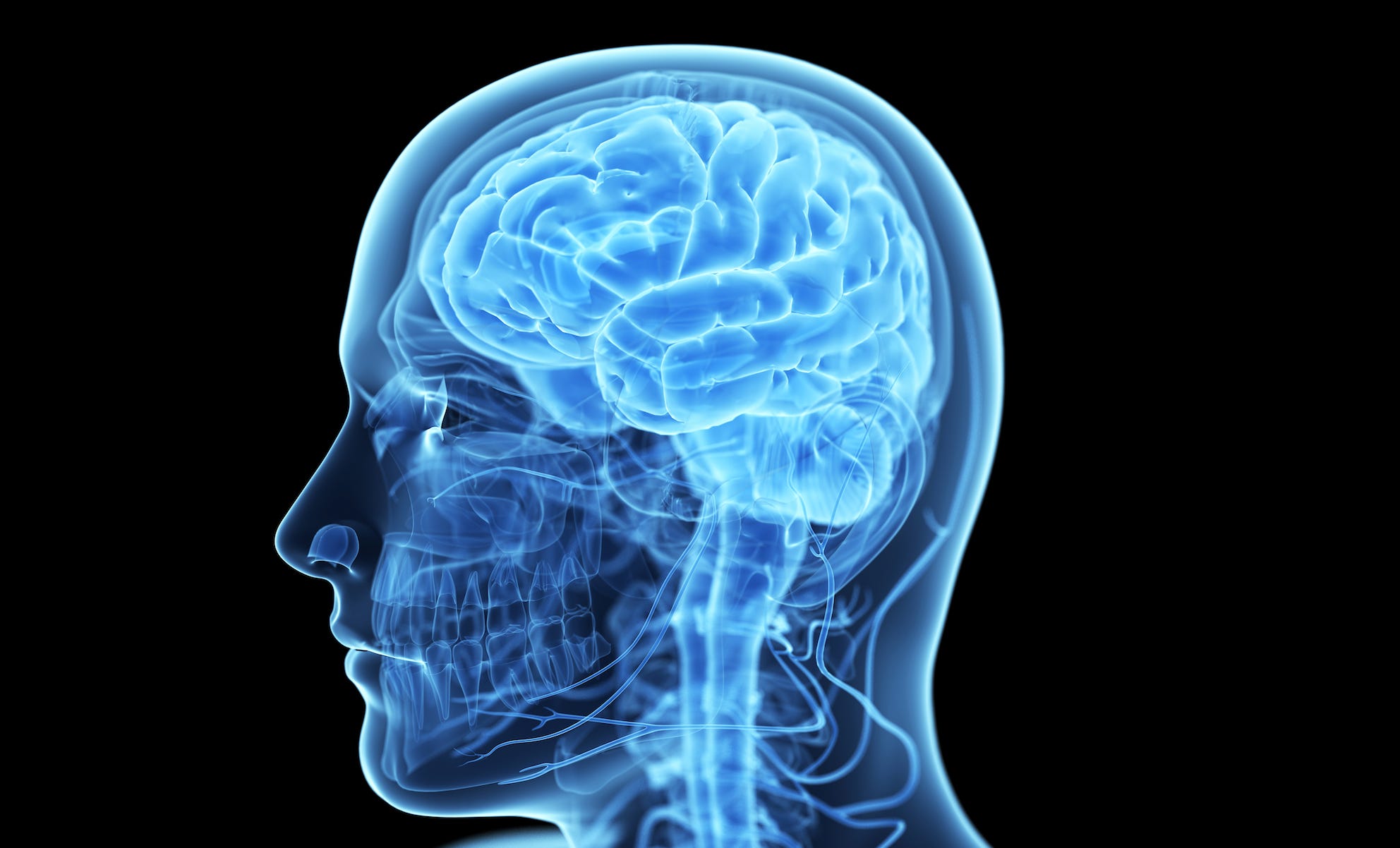
With over 86 billion neurons, the human brain is the most complex object in the known universe. It is the ultimate supercomputer and the most powerful, efficient system that we know of. Our brains run on less power than a lightbulb, but it can think, feel, remember, imagine, and adapt in real time. Everything we see, everything we touch, everything we hear and feel, gets compressed into what we experience as “reality”. And we can rewire it. Our brains aren’t fixed. It’s able to change and adapt, make new connections, and learn. We can store information (memory) and literally reshape our neural pathways based on experience.
As you’re reading this, your brain is processing a multitude of information that it’s interpreting into meaning. It’s not just letters in words, sentences on a page. It’s context, it’s meaning.
By the way, did you even realize you were breathing while reading this? How about blinking? How about the fact that your heart was beating hundreds of times? Your brain controls all of this, your body temperature, digestion, and more, all on its own.
And we’re not just smart, our bodies are equally incredible.
Our bodies can repair themselves. A completely broken bone can heal itself completely in a few months and become stronger than it was before the break.
We have over 600 muscles that work together to create movement. Our immune system constantly scans and neutralizes threats, then builds up memory to prevent future attacks. We have our own natural defense system. And it does all of this without us even noticing. It’s automatic. We don’t need to press a button, we don’t need to activate a line of code, it just happens.
I’m going to stop here because I think you get the point. We’re a goddamn masterpiece. God, if he’s really out there, was absolutely cooking when he created us. We are the gold standard.
And yet, awesome as we are, we’re still limited. We still have biological constraints. But this is why we create. This is why we innovate. The fundamental purpose of technology is to extend our capabilities. The core function of innovation is and has always been to augment the human brain and the human body. To augment us.
The Steam Engine - and the arrival of mechanical muscle
If you’re an average man in decent shape, you’re probably able to carry about 100-150 pounds (or a woman, 50-100 lbs). That is until, a few moments later, when you need to set it down and rest.
But put yourself in the driver’s seat of a forklift, and suddenly, you’re able to carry over 5,000 pounds with just a few movements of your finger. This is the power of machines. The ability to augment human strength by an order of magnitude.
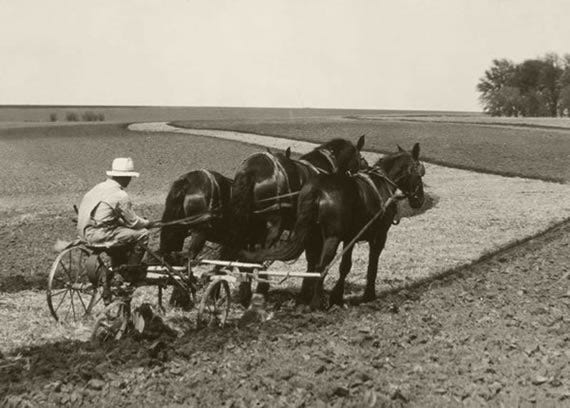
Before the industrial revolution, power was limited to human or animal muscle, waterwheels, and windmills. All inefficient and inconsistent. Moving heavy stones required dozens of people. Both the waterwheel and windmills - two stepping stone inventions in and of themselves - were at the mercy of nature. A frozen river or a mild, sunny day gave you nothing. Nature was the boss and work stopped when it said so.
In the 1700s, the steam engine arrived, shattering these constraints and effectively decoupling productivity from nature.
Instead of relying on muscle or weather, we created a machine that could generate power on command 1[1]. For the first time, humans could wield power at scale, whenever we wanted it. Power at our fingertips.
What once required dozens of workers could now be accomplished by a single person operating a machine. When my friends and I moved out of our college house, we rented a U-Haul truck to lug our things from Santa Cruz down to SoCal. If not for technology like this, we would have needed days and an army of movers. James Watt, a Scottish instrument maker who perfected the steam engine, described his breakthrough by comparing it to horse labor. His engine could do the work of 10, 20, and even 30 horses. This is where we get the term “horsepower”.
The steam engine was a step function in multiplying our natural human strength. For the first time in human history, individual humans wielded the strength of giants. We all became goliaths.
The Printing Press - and the amplification of voice

For most of human history, knowledge and information was transferred orally. Oral traditions laid the foundation of culture. Stories, beliefs, and skills were passed down person to person. You knew something because your dad told you, who heard it from his mom, who learned it from her uncle, who got it from his tribe leader. If something wasn’t remembered, it was lost.
The invention of writing helped, but written texts were still scarce. Literacy was rare and generally reserved for elites, writing materials were expensive, and copying was manual.
In the 1400s, a goldsmith from Germany, Johannes Gutenberg, invented a machine that could mass produce written text2. Instead of people hand-copying books line by line for months, the printing press let you stamp page after page, with both speed and consistency.
This was the beginning of mass communication and the democratization of knowledge.
Back then, your reach went as far as your voice could project. The invention of the printing press cut through that limitation. Suddenly, you didn’t need to be in the inner circle of elites to get information, you didn’t need to sit in a cathedral to hear scripture, information could flow freely from mind to mind, bypassing gatekeepers entirely.
Today, we’ve amplified this a thousand times over. We don’t just print books anymore. Ideas, stories, and information can reach millions in minutes through platforms like YouTube, X, TikTok, and Substack. One viral post can be seen by millions of people around the world in a matter of seconds.
Our voices used to fade in the air. Now it circles the globe.
The Camera - and the extension of memory
Without looking at your camera roll, tell me…how did you celebrate your 22nd birthday? What did you do on your third date with your significant other? What was the first song that played at the first concert you went to? Do you remember? Chances are, you’re able to recall bits and pieces of those experiences, but not every detail. Our brains aren’t built to preserve every memory.
As the saying goes, “life is but a fleeting moment”. We go through our lives accumulating experiences every waking second. But most of what we experience is forgotten. Humans have a slippery memory. We forget names, we forget what we ate for lunch last Thursday, and even the memories we do hold onto aren’t reliable. Every time we recall the past, we’re not replaying it but reconstructing it in fragments. And every time, those bits & pieces of memory get distorted and reshaped. We don’t remember objectively, we remember subjectively.
The camera changed this by giving us an external memory bank. Instead of having to recall experiences in hazy detail, the camera could capture them. It gave us the power to freeze moments in time. To freeze history. This fundamentally changed the way we remember. No longer were our memories just elusive stories & images swirling in our heads. They became durable, shareable, and potentially permanent.
Wars, protests, weddings, concerts, and other events that would’ve lived only in stories now live in our photo albums. We’ve even created a new standard of proof: “pics or it didn’t happen”. A photo or video keeps a moment exactly as it was in visual precision, keeping it ‘alive’ long after our brains would’ve forgotten it or let the memory fade.

We aren’t able to stop time, but we can capture fragments of it. Our camera rolls now function as time-traveling machines. There are events in my life that I once thought I had forgotten forever. And then someone sends or shows me a photo of it, and all of a sudden, the memories come flooding back. “Oh yeahhh, I remember that!” Last month, my uncle showed me a video from my grandparents’ 50th Anniversary party in Taipei. I was 7 years old, and it was my first time visiting Taiwan but I hardly had any clear memories of it. But suddenly, after being shown the videos, I remembered! Those videos enabled me to travel back into the past, back into the mind of 7 year-old Carter, to remember.
Time flies, but luckily, we have technology that allows us to travel back and relive the past.
AI - and the augmentation of intelligence (aka, the Final Boss of augmentation)
From the invention of the abacus to the printing press, and to the internet, each innovation leap has served to extend our minds’ capabilities. AI is the latest chapter in this story. Except this time, we’re not just extending memory or communication. We’re extending intelligence & thinking itself - the very capability that we’ve used to create technology. Which means that fundamentally, AI is augmenting our ability to augment ourselves. It’s an augmentation accelerator!
Intelligence is the raw material for progress. Everything that’s been built in our world was done with human intelligence. From the device you’re reading this on, to this floor you’re standing on, to the city you live in. It was all designed and created by human minds, just like yours.
But we’re now standing at a unique moment in history. For the first time, we’re not just working with human intelligence alone, but with machine intelligence. Anything previously done with mere human intelligence can now be supercharged.
Human intelligence and machine intelligence do different things well. We humans, are able to understand context with little data, excel at intuition, and at applying common sense. Our brains have been honed through millions of years of evolutionary programming to give us ‘gut feelings’ that help us make instinct-based decisions. We have emotional depth (aka, emotional intelligence), that is uniquely human and enables us to navigate our all-too-often complex social dynamics. And we’re able to be genuinely creative and imaginative. AI, on the other hand, is much faster at processing, synthesizing information, and pattern matching at scale. It can do routine tasks far more efficiently than humans. It’s consistent, precisely data-driven, doesn’t “tire”, and can follow rules to a tee.
Garry Kasparov, the former world chess champion who famously played IBM’s Deep Blue in a match, takeaway after playing the machine was that the best outcomes emerge from combining human intuition with machine calculation. “AI-based machines are fast, more accurate, and consistently rational, but they aren’t intuitive, emotional, or culturally sensitive”.
The implications of this human-AI partnership are widely debated, but one thing is true. With more intelligence now at our disposal, we’re becoming more capable as a society. We’ll be able to solve harder problems, answer bigger questions, discover greater mysteries, and accelerate innovation and progress.
And we’re already seeing this in action.
Software developers are now working with AI coding assistants that handle the tedious parts of coding, freeing the developer to focus on problem-solving, design, and injecting taste. Programmers can now prototype ideas in minutes and run tests on their code that would have previously taken them hours. Companies’ codebases are increasingly being written by AI. And we’re seeing this pattern of AI handling execution, while the human provides the vision and taste extending to other areas.
In architecture, architects can now quickly generate dozens of concept sketches for a building by describing to GPT, Google’s Nanobana, Midjourney, or many of the other AI image-gen models. The architect provides the creative direction, aesthetic judgment, and the final decisions, but AI amplifies their ability to iterate and experiment on the designs.
I’ve even used AI to generate the cover art for many of my recent Substack essays. I loosely described what I wanted to Gemini or GPT, and after a few different iterations, it whipped up options that I liked but could have never drawn or produced myself.

In hospitals, doctors work with AI systems that can analyze medical scans faster and more consistently than human eyes alone. The AI flags potential concerns from X-rays, CT scans, and MRIs to spot patterns that could indicate certain diagnoses. Here, the doctor still uses his or her expertise and judgment, but now they’re partnered with a superhuman pattern recognition machine.
These are just a few examples, but there are countless others emerging every day. The age of AI has barely just begun. All previous technologies required our human intelligence to create and improve them. But AI can help us design better AI. For the first time, we have a technology that can participate in its own advancement, creating a feedback loop unlike anything in history.
The pace of augmentation itself is now being augmented. We’re not only becoming more capable, but we’re becoming more capable of becoming more capable.
We all have superpowers
What does it mean to be human? Maybe we’ve been answering this question wrong. We’re not mere biological beings constrained by evolution. We make tools. We solve problems. We innovate. And we level up and push past our natural constraints. This is the fundamental purpose of innovation. The technology we invent is a manifestation of human ingenuity.
Beyond AI, this drive to augment ourselves continues in other dimensions. Technologies like Neuralink point toward a future where the boundary between human and computer dissolves entirely. Nolan Arbaugh, paralyzed from the shoulders down after a diving accident, became one of the earliest Neuralink users and can now control computers with just his thoughts. He plays chess, posts on X, and even plays video games like Civilization VI for hours. All without moving a muscle. This could very well be a preview of the final form of human augmentation, where we don’t just extend ourselves through external tools, but integrate them directly into us. A cyborg future where thought becomes action.
We are the same species that painted on cave walls and built the first tools. We are the same species that learned to sail across the sea to break down the physical barrier of land (and soon, space). We are the same species that gazes up into the sky, into the unknown, and wonders, “what could be?”. It is this very question that pushes us to transcend our limitations.
And transcend we have. Every generation becomes more capable than the last. We have more power in our hands today than kings possessed in the past.
Planes enable us to fly. Vaccines augment our self-healing abilities. Telescopes allow us to peer into the heavens. Lightbulbs let us see through & pierce the blinding darkness. Glasses clarify our vision. The GPS strengthens our sense of direction. The printing press and now social media amplify our voices. Cameras extend our memory. And now, AI is augmenting intelligence itself.
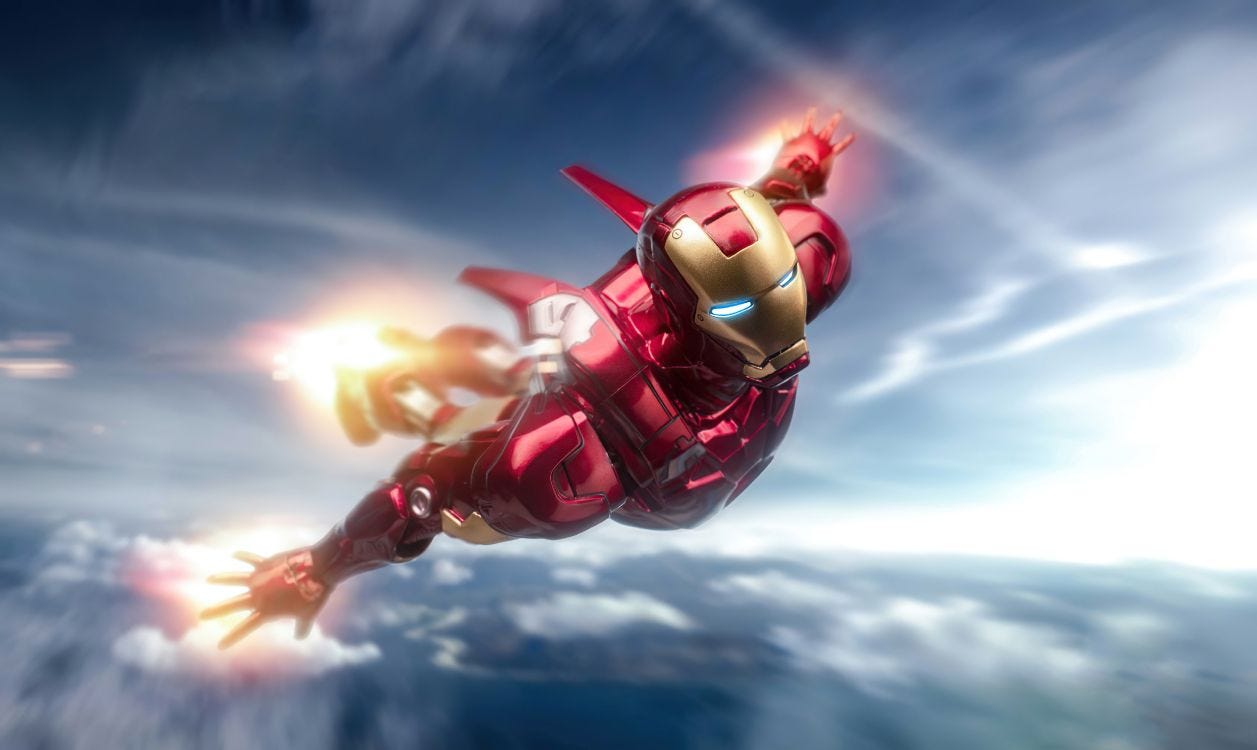
In their fictional worlds, Marvel and DC gave humans supernatural powers. In our world, we create our own superpowers through technology.
The only difference is, ours are real. We all have superpowers.
The steam engine worked by burning fuel to boil water, creating steam that pushed pistons to generate mechanical motion, turning heat into reliable, controllable power.
The printing press was a machine that used pressure to push ink from raised letters or images onto paper. You can think of it like a huge metal reusable stamp.
Thanks to Ryan, Colby, and Max for their feedback on early drafts of this essay.
Our obsession to create amazing things, and ability to collaborate, achieve common goals made us special.
I thought a little bit more on why I don't feel like a superpowered individual and I think it's because I don't see these tools as augmentation. I see them as tools. And so when I use a calculator, I don't think, "I'm a human calculator" because I'm a man holding a calculator. A man with actual computing power in his head would be a human calculator. Having access to a calculator does not increase my inherent maths skills because that calculator can be taken away at any time. So neuralink, I see that as genuine augmentation because that will always be with you. The only way I would see myself as being extended by a tool is if I was extremely proficient with it. Back to the calculator example, I've forgotten now, but if I remembered how to find complex derivations with it, I could consider that augmentation. Same thing about being super skilled on the geetar. But telling a computer to play me a song at a click of a button, that's not power. That's outsourcing the work to something else. That doesn't improve me at all. I guess that's a part of it. The tool needs to directly improve my capabilities, not necessarily my output.
I agree with Joseph btw.